Every Brand Is a Creator: The Case for Building a YouTube Channel
Introduction
Most marketing professionals working in companies or agencies have managed an Instagram account. A smaller subset has worked with TikTok. YouTube remains comparatively neglected. When the platform comes up in conversation, the typical corporate response is that the channel functions as a “repository”, a storage space for assets produced for other purposes. This framing is conceptually incoherent. A repository implies a closed warehouse, and there is no strategic rationale for maintaining a publicly visible warehouse of unintegrated content. The supermarket chain Esselunga does not leave the doors of its stockroom open to customers, and neither should brands.
The agency I founded, Flatmates, manages several corporate YouTube channels with measurable results. Investiamo ranks among the most-followed financial brand channels in Italy. When we propose YouTube to a new brand, the resistance typically organizes itself around three objections: that the target audience is not on the platform, that YouTube is not a priority, and that production costs are prohibitive. Each of these objections deserves a structured response.
1. YouTube is not a platform for children
The demographic objection does not survive contact with the data. According to Comscore audience measurements reported by Vincenzo Cosenza, YouTube reached an average monthly audience of 37.1 million users in Italy in 2024, making it the most-used social platform in the country, ahead of Facebook (35.8 million) and Instagram (32 million). Internal Google figures, often circulated in industry contexts, place the reach of YouTube even higher when considering all access points beyond Comscore’s measurement universe.
A more interesting data point concerns perceived trust. According to Kantar’s Future of Video study, commissioned by Google, 82% of US viewers agree that YouTube hosts the most trusted creators, and 83% agree it hosts the most trusted creator content, outperforming the social media average of 67% (computed across Facebook, Instagram, TikTok, and Snapchat). The composition of YouTube content explains this differential: the platform privileges long-form formats suited to explainers, professional analysis, and in-depth journalism. Italian examples that illustrate the format range include Marcello Ascani’s tour of CERN and GioPizzi’s analysis of public debt, formats that are structurally incompatible with the short-form economy of Instagram or TikTok.
2. YouTube performs measurable work in brand building
How is a brand built today? Which channels do people use to discover new brands? The diagram below, originally circulated in the ebook Digital Marketing senza Meta, summarizes the relevant hierarchy.
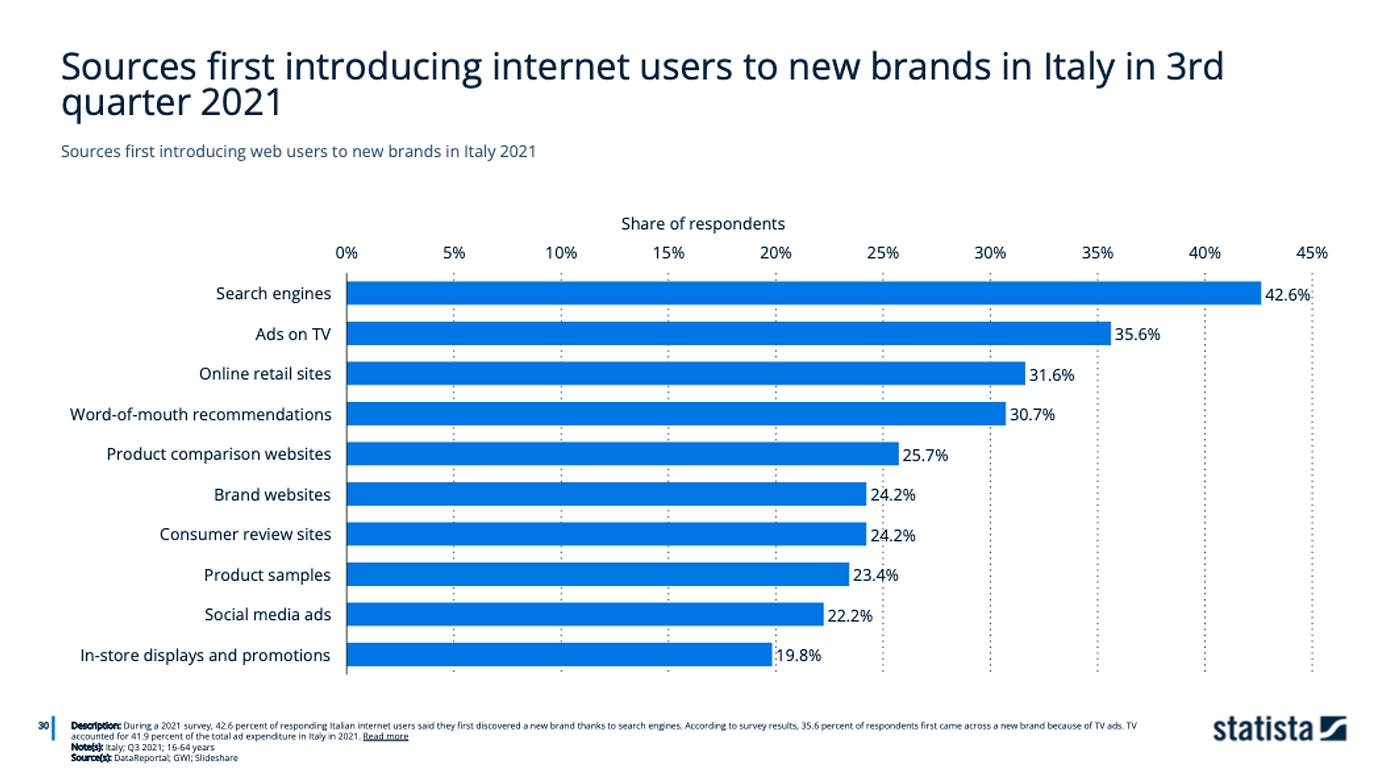
Consumers discover new brands primarily through search engines, television, and Amazon. YouTube is the second-largest search engine in the world, a fact whose strategic implications require no further elaboration.
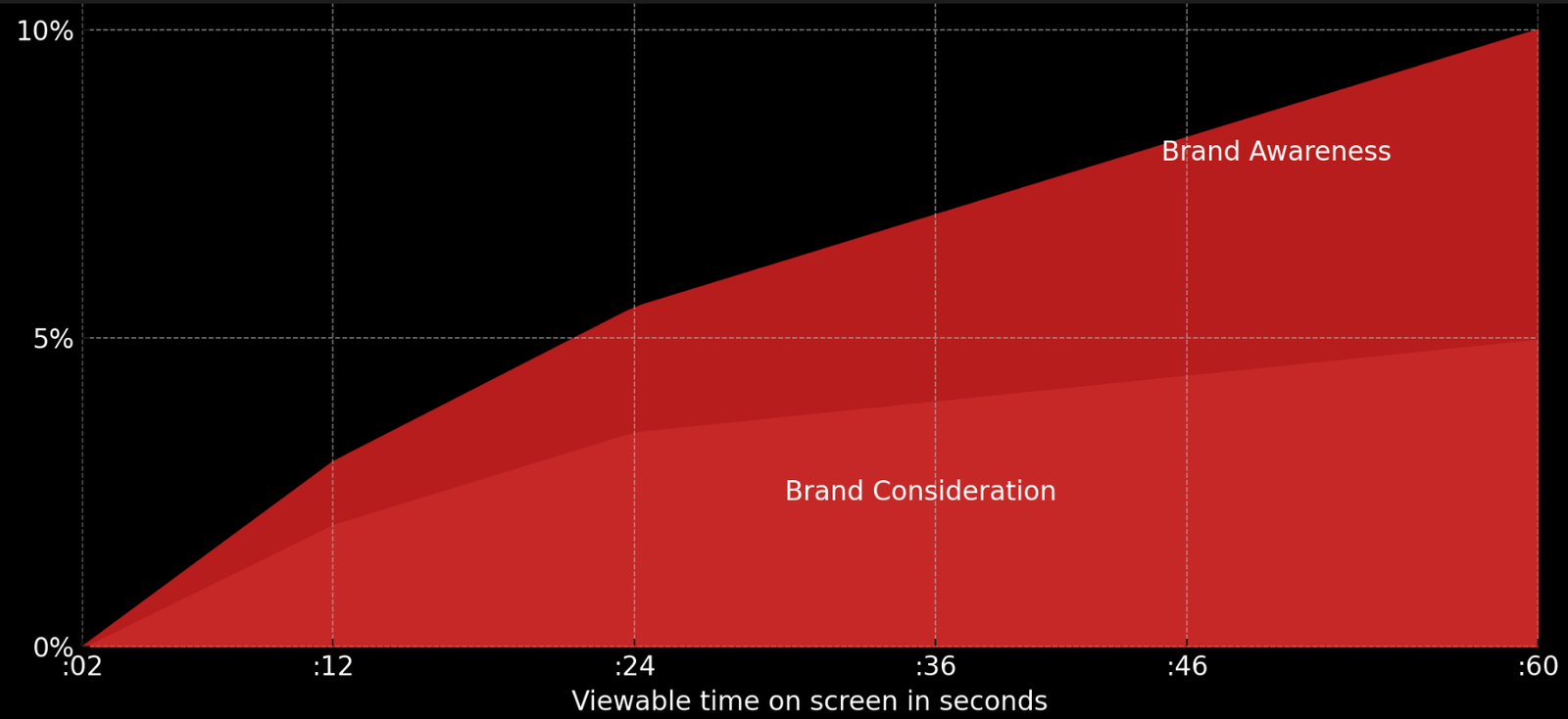
Google’s own research, summarized in Think with Google, establishes a direct relationship between watch time and brand lift, the metric used to compare brand awareness before and after a campaign. The functional form is monotonic: viewers who watch 30 seconds or more of an ad show consideration lift 45% higher, favourability 14% higher, and purchase intent 19% higher than control groups. Internal Google data suggest that 60 seconds of watch time can produce a brand lift of approximately 10%, although the exact threshold varies by category and creative.
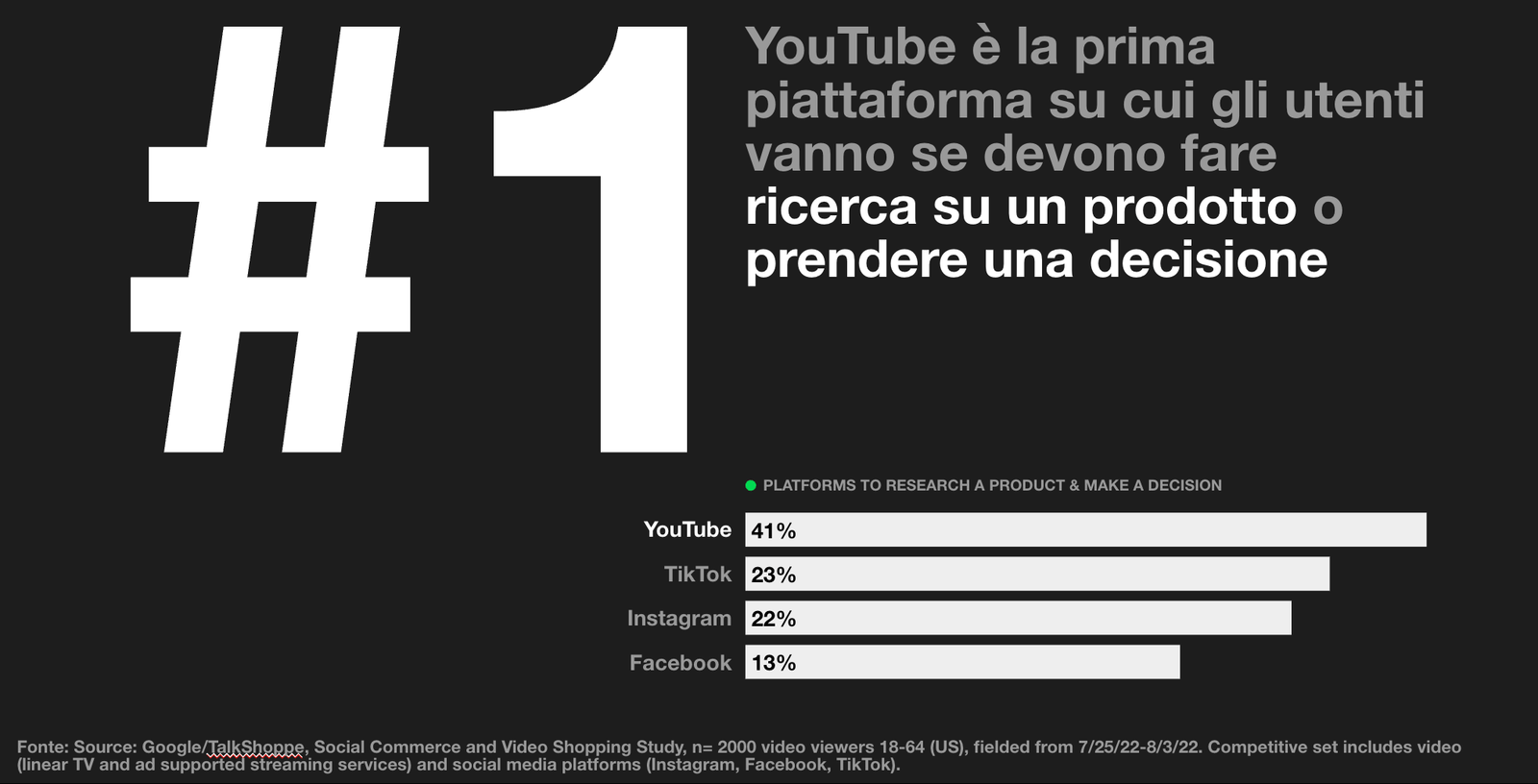
The relevant insight is twofold. First, YouTube is the leading platform for planned-purchase research, which is intuitive: a consumer evaluating an oven consults video reviews rather than Instagram stories. Second, the platform’s lead over alternatives is approximately 20 percentage points, a margin that warrants strategic attention rather than marginal media allocation.
The same dynamic extends to conversion. According to Think with Google research published in 2025, users watched over 35 billion hours of shopping-related content on YouTube in the previous year, and YouTube ads viewed on connected TV screens alone generated more than one billion conversions. These figures position YouTube as a discovery and decision engine, not merely a distribution channel.
3. YouTube can be more cost-efficient than Instagram
The value of any media investment must be assessed against outcomes and benchmarked against alternatives. A brand might reasonably budget 30,000 euros for a corporate video. For comparable expenditure, the same brand can commission a dedicated video from a YouTube creator with between 500,000 and one million subscribers. When a brand purchases a creator collaboration, it is effectively buying three bundled components: the brand association with the creator and their values, the production of the video itself, and the amplification through the creator’s audience.
In adjacent contexts, these three components would be procured separately. A thirty-second television spot requires a testimonial or actor, a production company, and a media budget for distribution. The integrated nature of creator partnerships explains much of their cost-efficiency relative to traditional approaches.
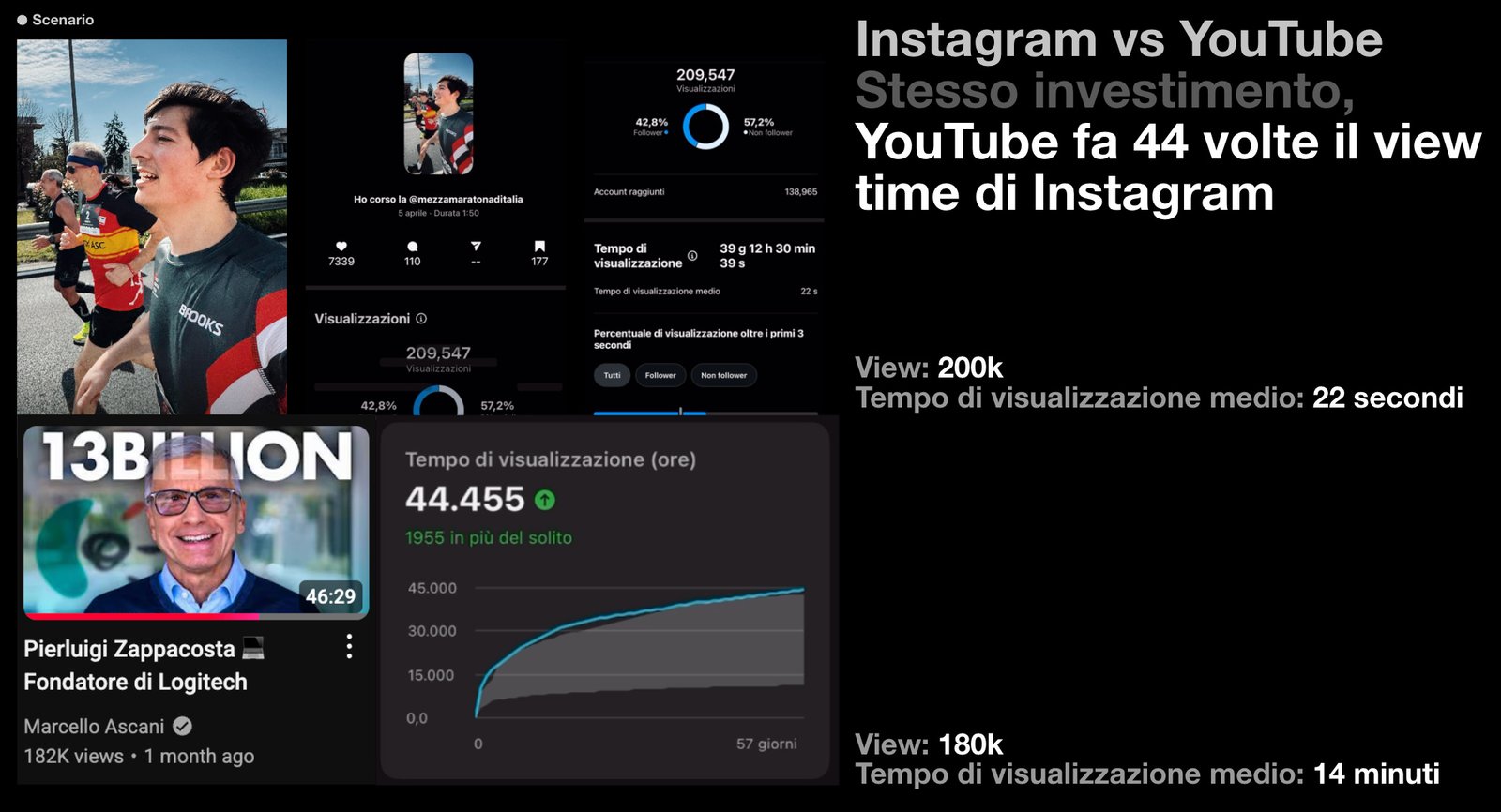
Median pricing for the videos Flatmates produces sits around 2,500 euros, which corresponds to a mention rather than a dedicated video. Clients tend to pay comparable rates for Instagram Reels and for YouTube videos, but the watch time generated by the two formats diverges substantially. In one comparison conducted internally, two videos with equivalent view counts produced a watch time 44 times higher on YouTube than on Instagram. At equivalent cost, the YouTube format retained target attention for an order of magnitude longer.
4. Two modes of consumption: lean-in and lean-back
Effective YouTube strategy requires understanding how users arrive at content. The platform differs from its peers in that it sustains two complementary modes of consumption.
Lean-in describes active consumption: the user searches, clicks, and navigates the platform, typically because they need a tutorial, a product review, or a how-to. Lean-back describes passive consumption: the user is on the sofa, consuming entertainment, web series, or longer-form content that does not require active selection.
This distinction maps onto a strategic decision that every brand must make: between influencer marketing and the development of a proprietary channel.
If the objective is rapid access to an existing audience, influencer marketing, defined as the production of videos with creators, published on their own channels, is the appropriate vehicle. The speed gained is offset by reduced control: maximum effectiveness requires that the creator retain editorial autonomy over message construction. The format performs well but is not suited to brands that require tight message governance.
If the objective is the long-term construction of a proprietary audience, founded on the reasonable assumption that YouTube, having operated for twenty years, will continue to operate for some time, opening a brand channel becomes the appropriate option. The approach requires consistency and patience, and results typically materialize on a longer timescale. Once the audience is built, however, it persists, and a subset of viewers may opt into notification systems by subscribing to the channel.
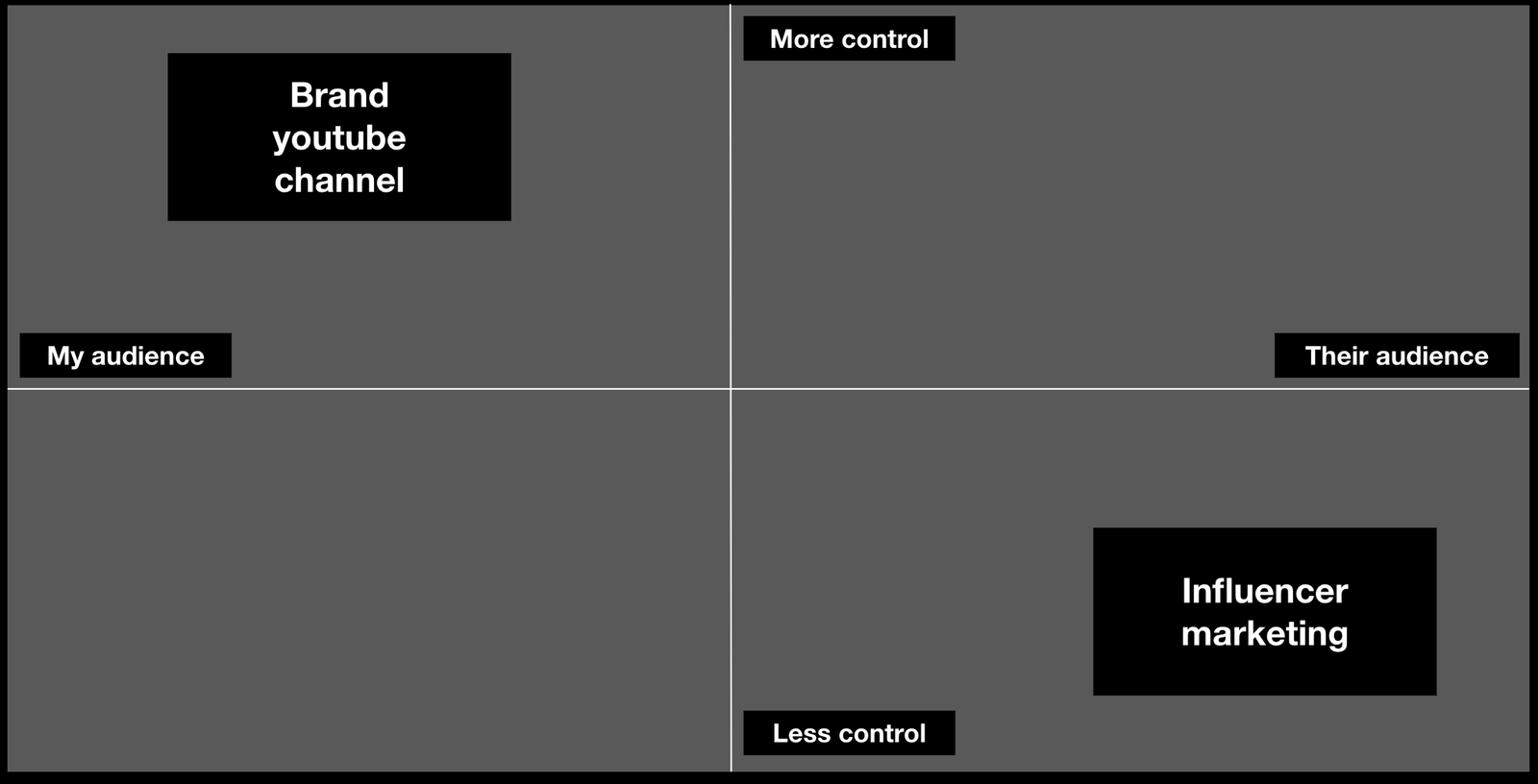
Two examples illustrate the polarity. For influencer marketing, the canonical case is MrBeast’s brand integration with Brawl Stars in his 2021 “real-life Squid Game” video. According to Sensor Tower data, first-time US downloads of Brawl Stars increased by a factor of 4.5 week-over-week, worldwide downloads grew 41% in the six days following the release, and weekly worldwide player spending reached 8.2 million dollars, a 54% increase. The campaign is exceptional in scale but illustrates the upper bound of the format.
For the brand channel model, Esselunga’s YouTube channel is a useful Italian reference. The channel publishes approximately one video per week, the majority produced in collaboration with creators. The ASMR videos by Chiara, in particular, generate substantial, active, and positively engaged audiences on the brand’s own surface.
5. One platform, multiple functions
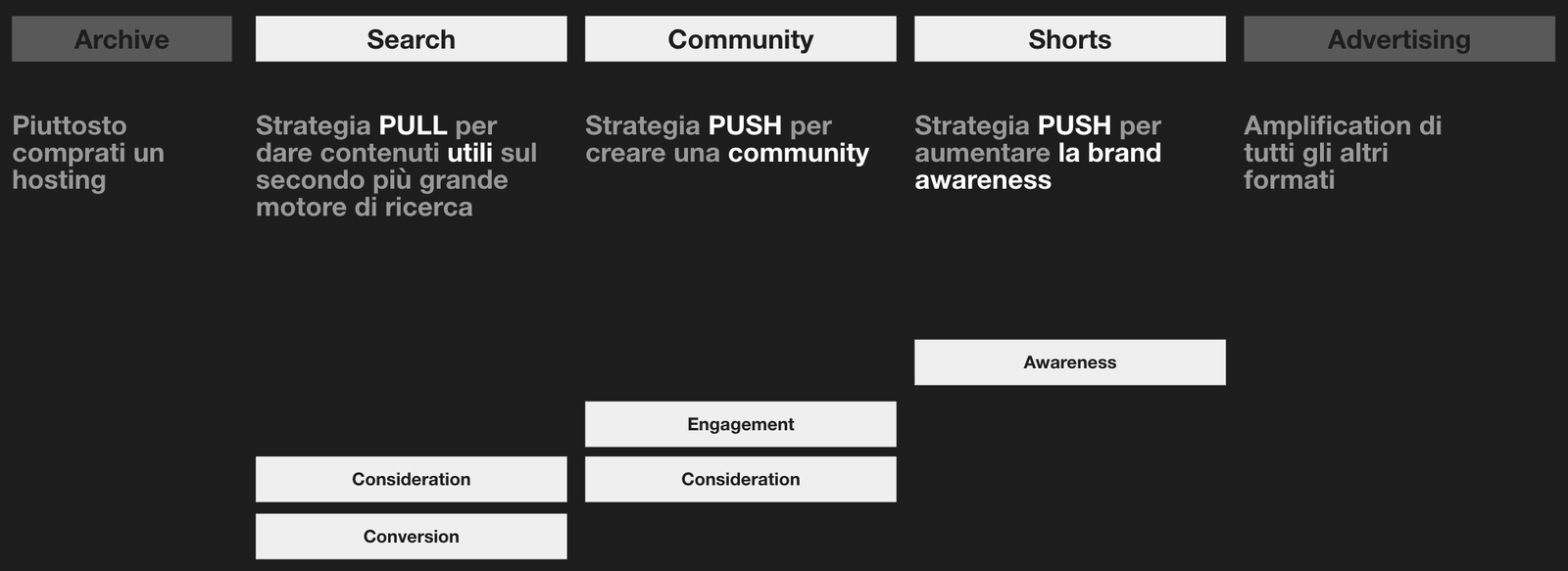
Google’s own framework positions YouTube as a full-funnel asset. The same channel can operate as an archive, a conversion engine that intercepts search traffic, a community-building surface that supports engagement, and a brand awareness tool that leverages YouTube Shorts and paid media.
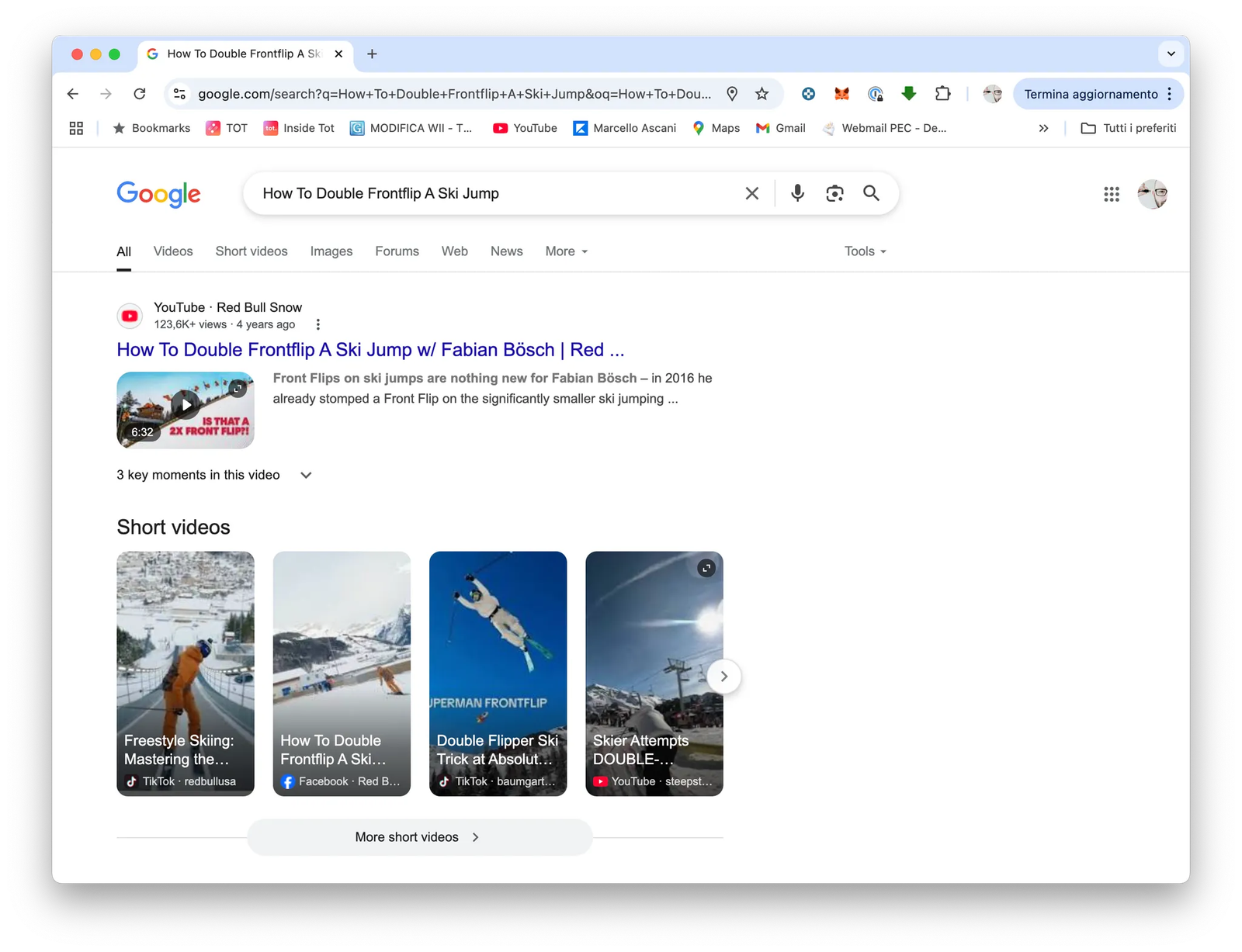
Red Bull operates an exemplary search-traffic strategy: a user looking for instructions on how to perform a double front-flip will encounter content produced by the official Red Bull channel. The strategic point is that on YouTube, unlike Instagram, brands can address three distinct audiences: a core audience of hardcore enthusiasts, a casual audience with moderate interest, and a new audience that discovers content through algorithmic surfacing or trending placements.
6. Practical criteria for video selection
The first step is to recalibrate expectations. Practitioners experienced with Instagram are already familiar with the principle, but for those entering from traditional broadcast or print contexts, the adjustment is significant. YouTube content does not need to meet television production standards. A useful heuristic is that a video that feels 85% finished is, in practice, ready to publish. The channel operates through iterative prototyping and continuous learning, not perfection. The instinct toward total quality control that characterizes traditional media production is, in this environment, counterproductive.
Beyond production calibration, four substantive criteria apply to content selection.
Total addressable market. The size of the addressable demand determines the upper bound of the format’s performance. Before committing to a video on a narrow topic, a useful sanity check is to search YouTube directly: the existence of comparable videos with significant view counts is a leading indicator that audience demand exists.
Repeatability and serial structure. A second criterion is the capacity to pull viewers from one video to the next. Rather than designing individual videos, brands should design formats. Vogue’s “73 Questions” series is a paradigmatic case: once 73 questions have been asked of one celebrity, the format extends naturally to others. The format “Hot Ones” applies the same logic with hot wings. Marcello Ascani’s “Imbucato In” series, set successively at Ferrari, Mutti, and Google, illustrates the principle in an Italian context.
Internet time versus evergreen content. Topical videos have a role, particularly for announcements or commentary on contemporary events. In most cases, however, YouTube content benefits from being lifted out of current time and placed in what can be described as internet time. A video titled “The New Turbo Column Drill of 2025” has a short half-life. The same content reframed as “Five criteria for choosing a column drill” retains relevance over years. Brands should systematically consider how a topic can be made evergreen.
Access and proprietary advantage. A final criterion concerns what only the brand can produce. Does the company have access to a hydraulic press, a spectacular location, a roster of athletes, exclusive products, or a CEO willing to appear on camera? What audiences seek on YouTube is access, defined as the possibility of seeing what is not normally visible. The bar is lower than most brands assume.
7. If they don’t click, they don’t watch
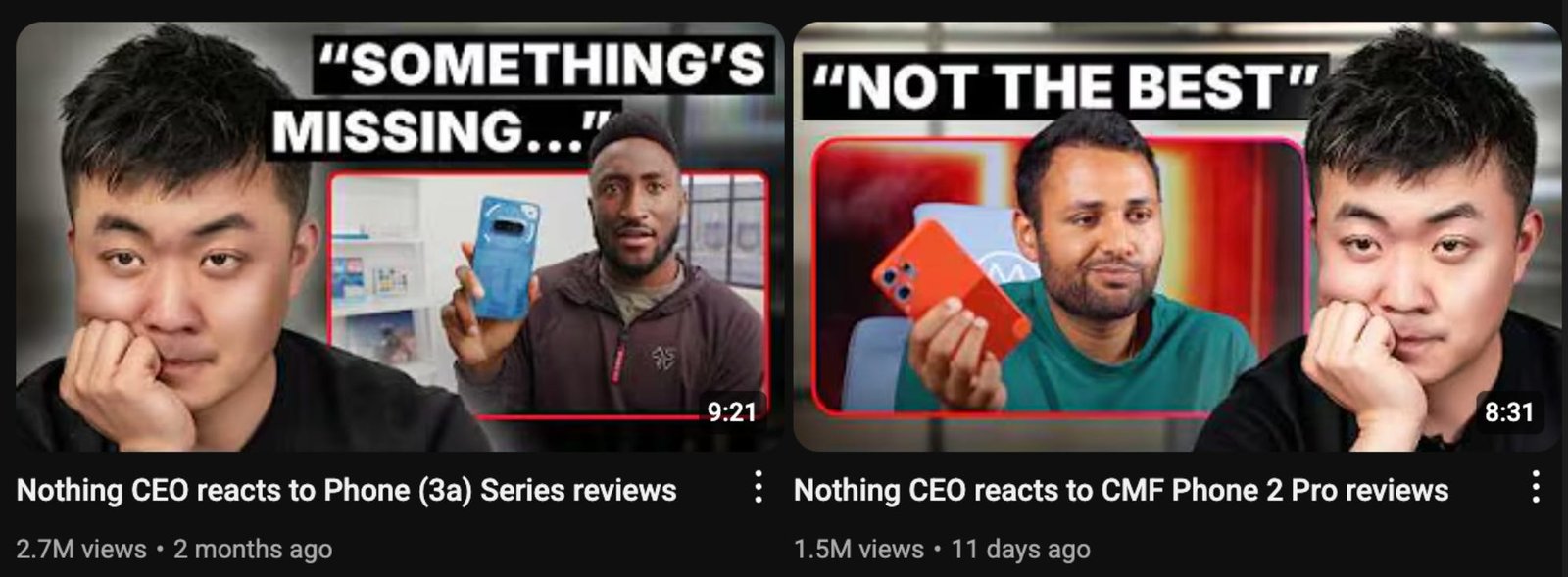
Practitioners who follow the meta-discourse on YouTube already know the principle: if they don’t click, they don’t watch. The phrase encapsulates the central operational difference between YouTube and other platforms. On YouTube, approximately 80% of the work consists of producing a thumbnail and a title that compel the click.
Half of this work concerns the title. Specificity and curiosity gaps are essential. The statement “a friend of mine met an actor” generates no interest because neither the friend nor the actor is identified. A more specific version, “Marcello Ascani met Al Pacino in a restaurant on the outskirts of Los Angeles”, performs better. Constructions that activate curiosity gaps, of the form “you will never guess who Marcello Ascani met”, typically outperform straightforward descriptions.
The thumbnail follows similar principles. Viewers can perceive at most three elements within a thumbnail. YouTube thumbnails are not the appropriate environment for minimalist graphic design or careful typographic detail.

Thumbnails operate through distorted proportions, exaggerated facial expressions, prominent numerical claims, and high-saturation visual elements.
Once the click is secured, the work continues. The hook, defined as the first seven seconds and then the first thirty, is the most consequential moment in the video. The viewer must be told immediately what the video will deliver and given a reason to stay. The opening seconds of HubSpot’s videos, one of the most-used CRM platforms, illustrate the principle clearly.
8. The Identity, Emotion, Action framework
The framework Flatmates applies to YouTube video construction is built on three sequential questions: Identity, Emotion, Action.
Identity asks who the audience is, with whom the brand wants to construct a relationship, and by whom it wants to be recognized. This question precedes all production decisions and shapes the description, the tone, and the references that the video will mobilize.
Emotion asks which affective response the video should elicit in its intended audience. Should viewers laugh, feel moved, feel energized, or feel reflective? The answer determines pacing, music, and narrative structure.
Action asks what the viewer should do after watching. Should they watch another video, purchase a specific product, subscribe to the channel, or change their behaviour in some defined way? Articulating the expected action before production substantially simplifies decisions about titles, topics, and editorial cadence.
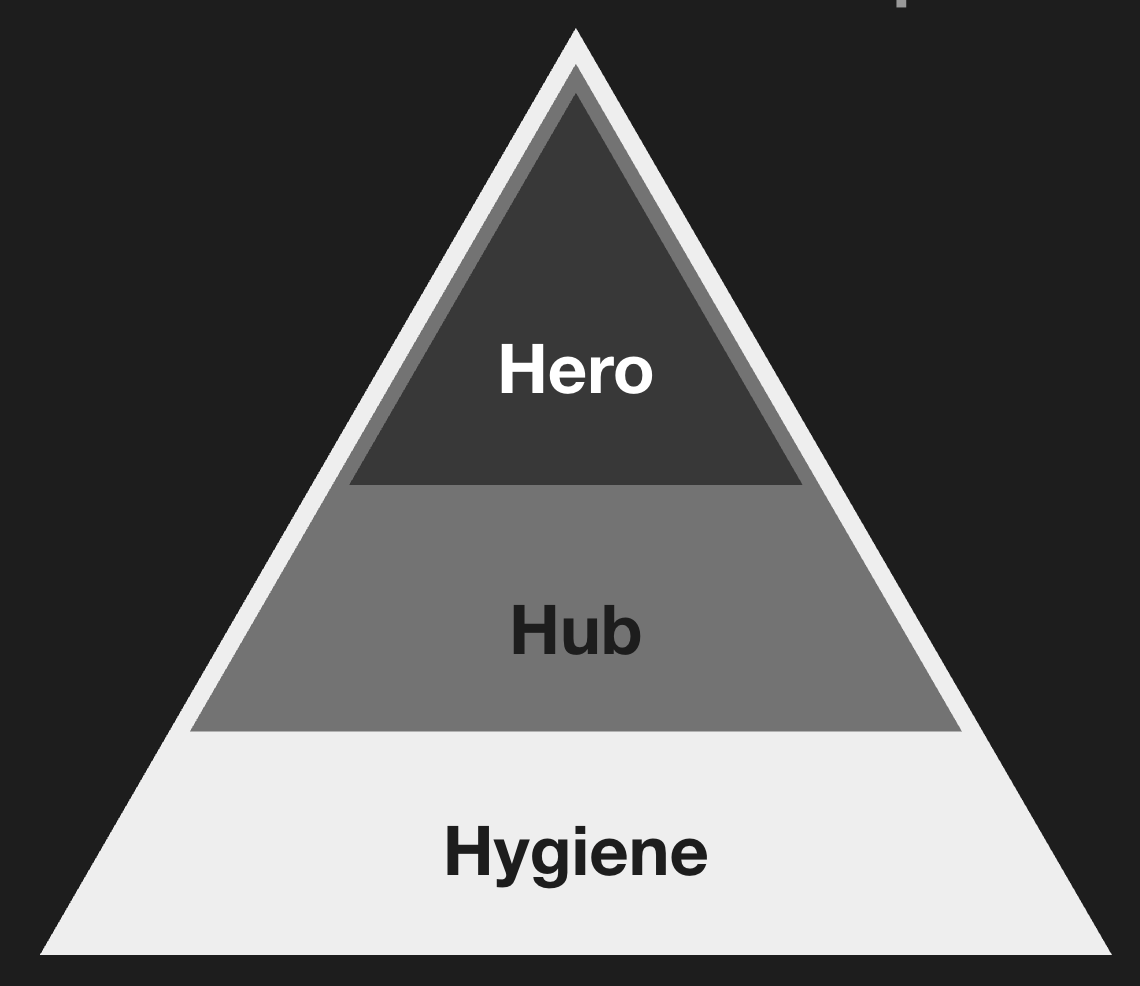
9. Editorial strategy: the three-tier pyramid
The Hygiene, Hub, and Hero framework, originally introduced by Google, can be replicated on YouTube as it has been in social media planning.
Hygiene content addresses the questions the customer is already asking. It targets search traffic and includes practical advice, tutorials, how-to videos, and product demonstrations. These videos do not require unusual creativity but must exist with sufficient density to capture the search volume that the category generates.
Hub content occupies the middle tier. It includes recurring formats, often produced in collaboration with creators, that build serial engagement and a sense of editorial rhythm.
Hero content sits at the top. These are campaign-level productions with substantial budget, designed for impact and produced once or twice per year. Their function is to anchor the channel’s positioning at scale.
For a brand such as Nike, Hygiene content might include tutorials on how to clean specific shoe models, Hub content might include training collaborations with athletes, and Hero content corresponds to the brand’s above-the-line campaign work. Published within an active community, even traditional campaign formats receive amplified visibility. Nike’s YouTube channel, with approximately 200 videos published per year, illustrates the model.
10. Paid media is not a failure of strategy
Paid investment on YouTube remains relatively limited in Italy, particularly among small and medium-sized enterprises. The relative scarcity of competition, combined with the platform’s reach, makes the channel particularly effective when used in conjunction with creators.
Delegating creative production to creators and using their image and rights in paid campaigns improves measurable outcomes. In one recent Flatmates campaign, the use of a creator in the advertising creative increased click-through rate by 11% relative to the baseline non-creator version.
Conclusion
The case for YouTube does not rest on a single metric. It rests on the convergence of several factors: scale of reach, perceived trust in creators, watch-time dynamics that favour brand lift, search behaviour that channels purchase intent, and a cost structure that bundles association, production, and distribution. None of these factors is dispositive in isolation. Taken together, they describe a platform that operates as both a top-of-funnel awareness surface and a bottom-of-funnel conversion engine, with proprietary characteristics that distinguish it from adjacent channels.
The strategic question is not whether to be on YouTube, but how to allocate effort between proprietary channel development and creator partnerships, and how to integrate organic content with paid distribution. The answers depend on objectives, time horizons, and tolerance for editorial autonomy. The framework offered here is a starting point, not a conclusion.
Sources
- Vincenzo Cosenza, Social Media in Italia 2024/2025, based on Comscore data — YouTube 37.1M monthly users in Italy (2024).
- Kantar, “Growing brand awareness with YouTube Sponsorships” — Source for the 82%/83% trust figures (US viewers, Google/Kantar Future of Video study).
- Think with Google, “Online video advertising & brand lift” — Watch time and lift relationship (45% consideration, 14% favourability, 19% purchase intent for 30+ second views).
- Think with Google, “How YouTube videos shape the shopping journey” — 35 billion hours of shopping content; 1 billion conversions specifically from CTV ads.
- Sensor Tower, “MrBeast’s Real-Life Squid Game Sparks 4.5 Times Increase in U.S. Downloads For Brawl Stars” — Source for 4.5x US downloads, 41% global, $8.2M weekly spend.
- YouTube Creator Marketing Playbook 2026 (Google/Kantar) — Methodological notes on Future of Video study.